Kona Ocean Tour Safety in Winter: What Guests Should Know
Winter in Hawaii brings a change in ocean conditions, especially along coastlines exposed to powerful North Pacific swells. For visitors planning a snorkeling trip, manta ray experience, or boat excursion in Kona, these seasonal changes can raise an important question: How do local tour operators decide when and where it is suitable to go out on the water?
The answer involves more than checking whether the weather looks sunny. Captains consider wind, swell direction, wave activity, local geography, and conditions at the intended destination before making decisions about an excursion.
Along the Kona Coast, the right location can make a meaningful difference. Some areas may be more sheltered from certain swell directions, while other locations can become exposed when conditions change.
Understanding how these decisions are made can help visitors feel more prepared and know what to expect when booking a Kona ocean tour during winter.
Why Ocean Safety Matters During Hawaii’s Winter Swell Season
Hawaii’s winter swell season generally runs from November through April. During this period, powerful storms in the North Pacific can generate large swells that travel toward the islands.
North-facing shores often experience the strongest winter surf. West-facing shores can also be affected when north swells wrap around the islands.
The Kona Coast is located on the leeward side of the Big Island, but that does not mean every part of the coastline is protected from rough water. Swell direction, wind, and local geography can still influence conditions.
For boat tours, the crew must consider the conditions along the route, at the destination, and during the planned activity.
A location that appears calm from shore may still have challenging water farther offshore. Likewise, conditions can differ between two nearby coastal areas.
This is why experienced captains evaluate the actual ocean conditions rather than relying on the season alone.
How Captains Assess Ocean Conditions Before a Tour
Before taking guests out, captains consider several factors that help determine whether a trip can operate safely and which locations may be suitable.
1. Swell Direction and Wave Activity
Wave height is important, but it is not the only factor that matters.
Captains also consider where the swell is coming from and how it interacts with the coastline. A location exposed to a particular swell direction may experience stronger wave activity than an area with more natural protection.
The period between waves and the way they move through coastal areas can also influence sea conditions.
These details help captains evaluate whether a planned route or destination is appropriate for the day’s conditions.
2. Wind Speed and Direction
Wind can affect how comfortable and manageable a boat trip will be.
Strong winds may create choppy surface conditions, increase spray, and make movement around the boat more challenging. Wind direction can also affect different parts of the coastline in different ways.
Even when wave activity appears manageable, unfavorable winds may influence a captain’s decision about whether to proceed.
3. Local Weather and Visibility
Weather conditions can change throughout the day. Rain, thunderstorms, poor visibility, and other developing weather conditions may affect the safety of an excursion.
Captains and crews must consider current conditions as well as forecasts when evaluating a trip.
4. Conditions at the Destination
The ocean conditions along the route are only part of the assessment. The intended destination must also be suitable for the planned activity.
For a snorkeling tour, the crew needs to consider water movement, entry and exit conditions, visibility, and whether guests can comfortably follow the activity’s safety procedures.
For a sightseeing or sunset cruise, the captain still needs to consider sea conditions and the comfort and safety of everyone aboard.
How Sheltered Locations Can Help with Winter Ocean Conditions
One advantage of operating along the Kona Coast is that the coastline includes different bays, coastal areas, and locations with varying exposure to incoming swells.
Depending on the direction and strength of the swell, some locations may offer more protection than others.
For example, areas around Keauhou Bay or near Kona International Airport may be considered when evaluating possible routes or destinations, depending on the actual conditions.
However, no location should be treated as automatically safe simply because it is known as a bay or appears sheltered on a map. Wind, swell direction, currents, and local conditions still matter.
A captain must evaluate the specific location on the day of the trip and decide whether it is appropriate for the planned activity.
Why the Captain’s Local Knowledge Matters
Knowing the Kona coastline is about more than recognizing landmarks. Local experience helps captains understand how different areas respond to changing ocean conditions.
They can use that knowledge when evaluating:
- Which coastal areas may be more exposed to an incoming swell.
- Whether wind conditions are affecting a planned route.
- Whether a different destination may offer more suitable conditions.
- Whether the water is appropriate for snorkeling or another planned activity.
- Whether postponing or canceling the excursion is the safest decision.
The important distinction is that choosing a more sheltered location is not a guarantee that a tour can operate. The final decision must always be based on actual conditions.
When Might a Captain Change the Tour Plan?
A reservation does not mean that a boat must visit a particular location regardless of the ocean conditions.
Responsible tour operations allow captains to adjust plans when circumstances require it.
Depending on the activity and conditions, a captain may consider:
Changing the route: A different route may be more appropriate if wind or swell conditions make the original plan unsuitable.
Selecting another location: If another area offers more suitable conditions, the captain may consider moving the activity there, provided it is appropriate for the tour and its purpose.
Adjusting the timing: Weather and ocean conditions can vary throughout the day. A change in departure timing may sometimes be considered when operationally possible.
Canceling the trip: If conditions are not suitable, canceling may be the safest decision. Protecting guests and crew must take priority over completing the scheduled excursion.
For guests, this means that flexibility is an important part of planning an ocean adventure during winter.
What Guests Can Expect on a Winter Kona Boat Tour
A well-organized tour should begin with clear instructions and a safety briefing.
Before departure, guests should receive information about the planned activity, equipment, and any important precautions. The crew should also explain what to expect when boarding, moving around the boat, and entering or exiting the water if snorkeling is included.
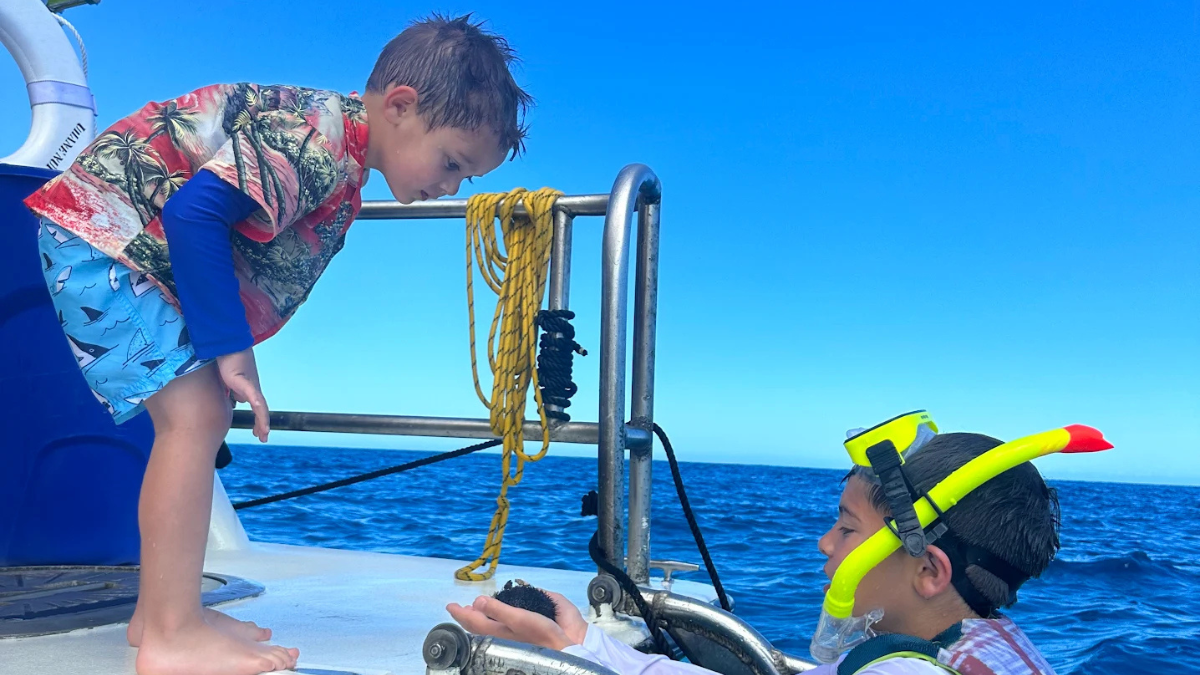
At Sunlight on Water, the crew provides snorkeling equipment and flotation for its manta ray snorkel experience. Optional wetsuits are also available.
The company operates a 40-foot U.S. Coast Guard-certified vessel with a shade canopy, bathroom, warm freshwater shower, and a swim platform with ladders for water access.
Its captains and crew are Lifeguard and CPR certified, and the company limits tour capacity below the vessel’s certified maximum to provide guests with additional space.
These features can help make the experience more comfortable, but they do not eliminate the natural risks associated with being on the ocean. Guests should always follow crew instructions and communicate any concerns before entering the water.
Learn more about the Sunlight on Water Sunset Manta Ray Snorkel and the equipment and amenities included.
How to Prepare Before Your Ocean Tour
Guests can also take a few simple steps to make their winter ocean experience more comfortable.
1. Be Honest About Your Swimming Ability
If your tour includes snorkeling, make sure you understand the swimming requirements and feel comfortable participating.
Flotation equipment is helpful, but it does not replace swimming ability or the need to follow safety instructions.
If you have concerns about your comfort or ability in the water, discuss them with the tour operator before booking.
2. Follow the Crew’s Safety Briefing
Pay attention when the crew explains the equipment, water entry and exit procedures, and safety expectations.
Ask questions if anything is unclear. It is better to understand the instructions before the boat reaches the destination.
3. Wear Appropriate Clothing
For a Kona manta ray night snorkel, Sunlight on Water recommends bringing:
- A towel
- Dry clothing
- A light sweatshirt or jacket
The company provides snorkeling equipment, flotation, optional wetsuits, snacks, and hot and cold beverages.
You can review the full list of tour inclusions on the official manta ray snorkel page.
4. Tell the Crew About Any Concerns
If you feel seasick, uncomfortable, unusually tired, or uncertain about entering the water, let the crew know.
Do not feel pressured to participate in an activity if you are uncomfortable. The crew can explain the available options and the safest way to proceed based on the tour and conditions.
5. Keep Your Schedule Flexible
Winter weather and ocean conditions can change. If an excursion needs to be adjusted or canceled, having flexibility in your travel plans can make it easier to reschedule when another opportunity is available.
Avoid leaving your most important ocean activity until the final hours of your vacation if your itinerary allows another option.
What If the Ocean Conditions Are Not Suitable?
Sometimes, the safest decision is not to go out.
Even when a tour is scheduled and guests are ready to depart, a captain may determine that the conditions are unsuitable.
This can be disappointing, especially when an ocean adventure is one of the highlights of a Hawaii vacation. However, responsible operators should never allow the pressure to complete a reservation to outweigh safety considerations.
If your tour is affected by weather or ocean conditions, review the operator’s cancellation, rescheduling, and refund policies.
You can also use the time to explore another part of Kona, enjoy a local attraction, or rearrange your itinerary.
For current marine information, visitors can review the National Weather Service Hawaii marine forecasts, which provide separate forecast zones for Big Island windward and leeward waters.
Enjoy a More Informed Kona Ocean Experience with Sunlight on Water
A winter ocean adventure can be a memorable part of a Big Island vacation, but understanding the conditions is essential.
From checking swell direction and wind to evaluating possible destinations, captains make decisions based on the ocean they encounter rather than assumptions about what a particular location should be like.
Sunlight on Water understands the importance of preparation, local knowledge, and guest safety. Its guided ocean experiences are led by Lifeguard and CPR-certified captains and crew, aboard a U.S. Coast Guard-certified vessel equipped for snorkeling and coastal excursions.
Whether you are interested in a manta ray night snorkel or a sunset cruise with manta ray viewing from the boat, the team can help you learn more about the available experiences.
Ready to plan your Kona ocean adventure?
Explore the Sunlight on Water tours or visit the contact page to learn more and plan your Kona ocean experience.


