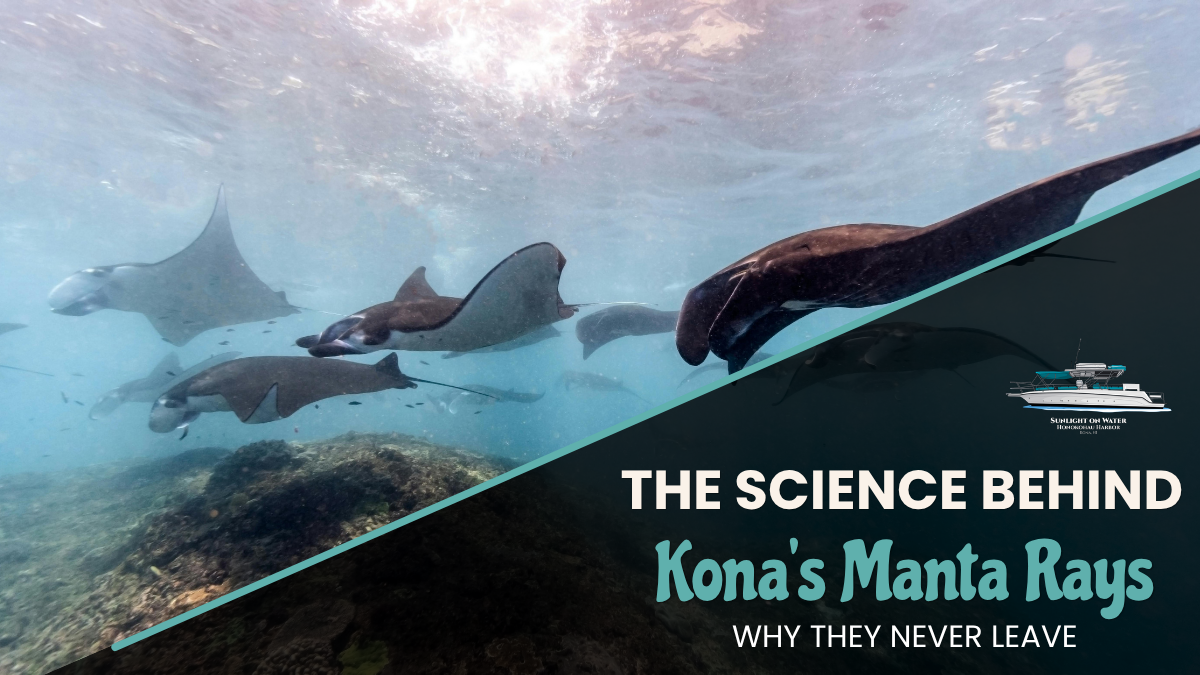
The Science of the Plankton: Why Kona’s Manta Rays Never Leave
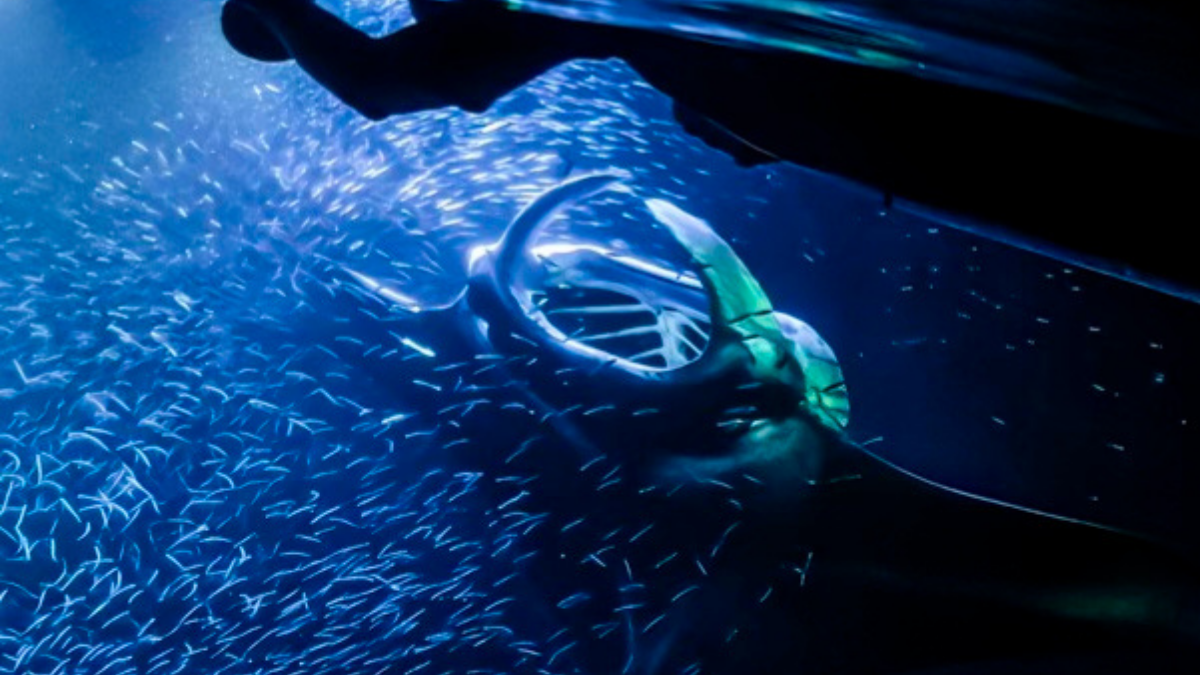
There is something almost magical about watching a manta ray glide through the dark ocean beneath a boat in Kona.
But the nighttime encounter isn’t magic.
It’s biology.
Every evening, tiny organisms called plankton become part of an extraordinary chain of events. Underwater lights illuminate the water, plankton gathers in the area, and manta rays arrive to feed.
Understanding that process gives you a completely different appreciation for a Kona manta ray night snorkel.
Instead of simply watching a giant animal appear beneath you, you begin to understand why the manta rays are there in the first place.
It All Starts With Plankton
Plankton refers to tiny organisms that drift with ocean currents. They include microscopic plants, animals, and other organisms that form an important part of marine food webs.
For manta rays, certain types of zooplankton are especially important.
Manta rays are filter feeders. Rather than hunting individual fish or other large prey, they move through plankton-rich water with their enormous mouths open, filtering tiny food organisms from the water.
That feeding strategy is one of the reasons the nighttime manta experience in Kona is so fascinating.
The manta rays aren’t visiting simply because boats are there.
They’re following food.
Why Do Underwater Lights Attract Plankton?
The lights used during nighttime manta experiences play an important role in creating the viewing environment.
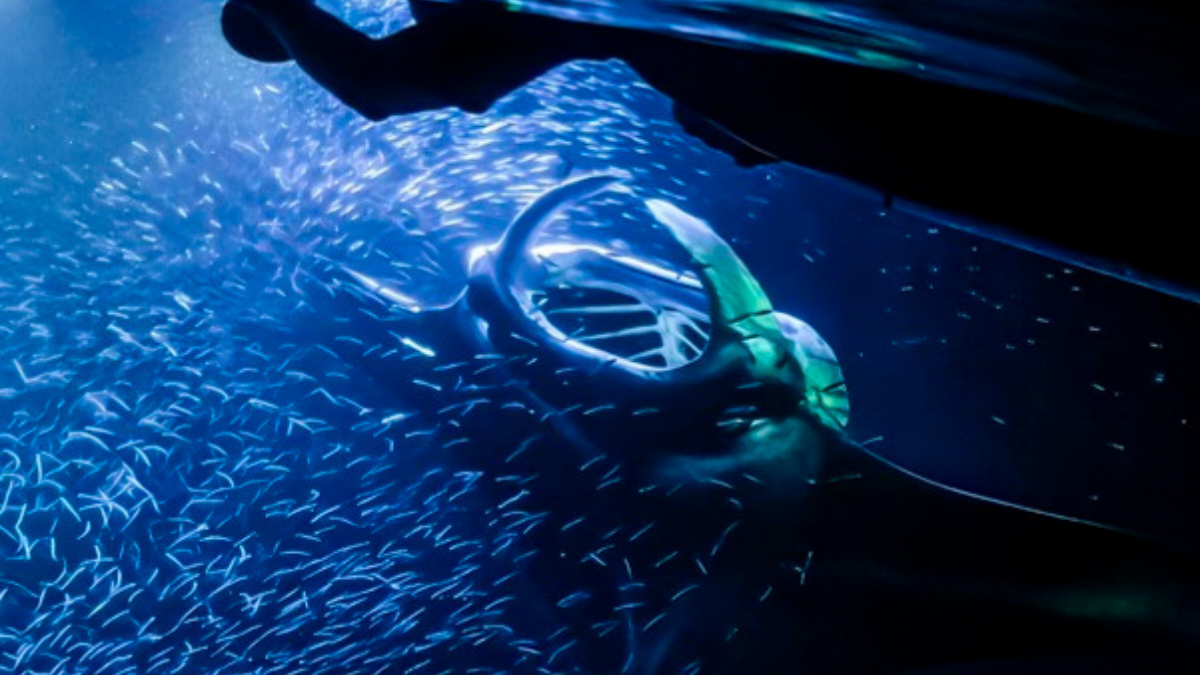
When underwater lights illuminate the ocean after dark, they can attract or concentrate plankton near the surface. As these tiny organisms gather around the illuminated area, they create an opportunity for manta rays to feed.
The result is a natural feeding interaction that guests can observe from the surface.
You are essentially watching the beginning of a marine food chain play out in real time.
Light attracts small organisms.
Small organisms attract manta rays.
And the manta rays create the unforgettable wildlife encounter.
Why Are Manta Rays So Well Suited to This Feeding Strategy?
Manta rays have evolved specialized adaptations for filter feeding.
Their large mouths and unique structures called gill rakers allow them to filter food from the water as they swim.
Their cephalic fins—the distinctive rolled structures on either side of their mouths—can also help direct water and food toward the mouth.
Watching a manta ray feed makes these adaptations easier to understand.
You may see a ray make a slow pass through the illuminated water, turn, circle back, and glide through the plankton-rich area again.
What looks like an effortless underwater dance is actually an extremely efficient feeding strategy.
Why Does Kona Have Such a Reliable Manta Environment?
Kona’s coastline provides a combination of environmental characteristics that help support its manta ray encounters.
The western side of the Big Island is influenced by its leeward location, which can provide relatively protected coastal waters compared with more exposed areas of Hawaii.
The island’s volcanic geology also shapes the coastline, creating underwater structures, bays, coves, and channels that influence currents and marine habitats.
These characteristics don’t mean conditions are identical every night.
Ocean conditions change.
Plankton availability changes.
Manta behavior changes.
But the combination of the local environment and an established food source helps explain why manta rays are regularly encountered in Kona.
The Manta Rays Aren’t Coming for the Tourists
This is an important distinction.
The manta rays aren’t trained.
They aren’t released into the area for visitors.
And they don’t appear because a boat has arrived.
They are wild animals responding to food and environmental conditions.
The nighttime tour simply gives people an opportunity to observe what is already happening in the marine environment.
That makes the experience more meaningful.
You’re not watching a performance.
You’re observing a natural feeding behavior.
Why Do the Manta Rays Keep Returning?
The idea that Kona’s manta rays “never leave” makes for a memorable headline, but the reality is more nuanced.
Individual manta rays move through their environment and can travel significant distances. Their movements aren’t completely predictable, and there is no guarantee that a particular animal will appear on a particular night.
At the same time, Kona is known for a resident manta ray population that regularly uses local waters.
Why?
Food is one important part of the answer.
If an area consistently provides suitable feeding opportunities, manta rays have a reason to return.
That’s one of the fascinating things about Kona’s nighttime manta experience: the same coastal environment can continue supporting feeding activity over time.
What Happens During a Kona Manta Ray Night Snorkel?
Once the sun goes down, underwater lights create an illuminated area beneath the surface.
The lights can attract plankton into the water column.
Manta rays may then move through the area to feed.
Guests typically remain at the surface, using flotation equipment while looking down into the illuminated water.
From above, the experience can seem almost otherworldly.
But underneath that beautiful scene is a simple ecological relationship:
Light → plankton → manta rays.
Understanding that connection makes the encounter even more impressive.
Manta Rays Are Built for the Open Ocean
A manta ray can have an enormous wingspan, yet its movements can appear remarkably graceful.
Instead of using speed to chase prey, manta rays rely on their size, body shape, and filter-feeding adaptations to process large volumes of water.
As they glide through plankton-rich areas, water enters their mouths and passes through their specialized filtering structures.
This allows them to capture tiny food organisms while continuing to move through the water.
For snorkelers, that means you may see manta rays performing repeated passes through the same illuminated area.
What looks like a choreographed routine is actually a feeding strategy shaped by millions of years of evolution.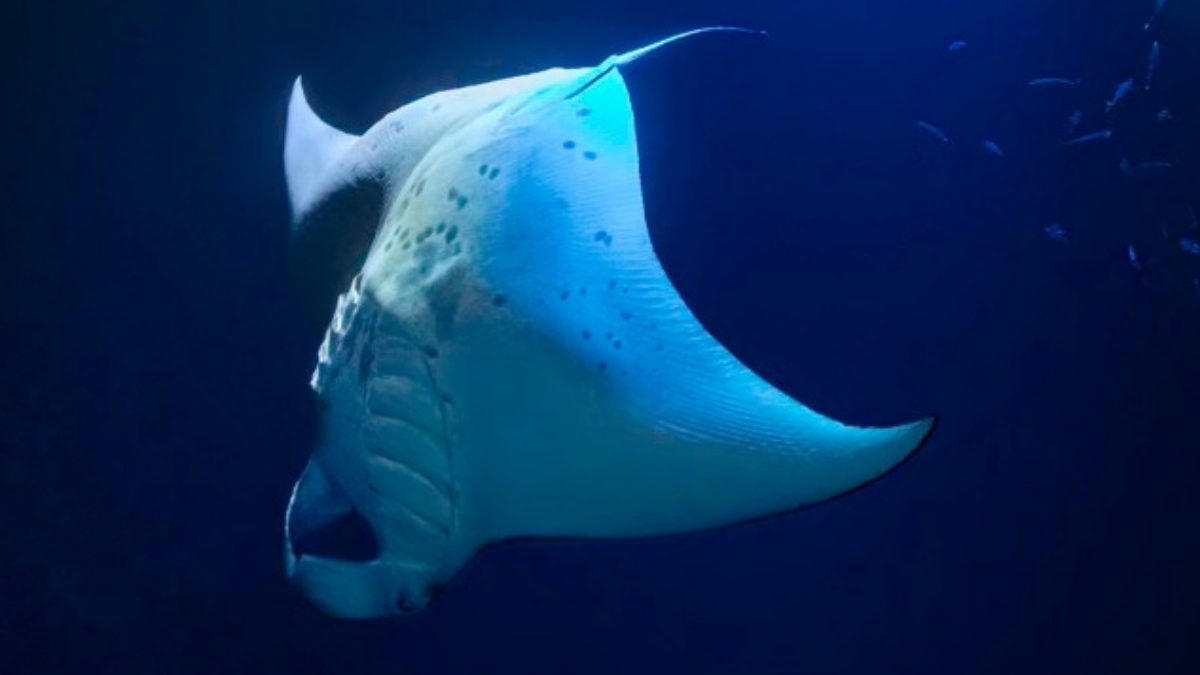
Why the Volcanic Coastline Matters
The Big Island is geologically young compared with many other Hawaiian islands, and its volcanic origins are visible throughout the Kona Coast.
Underwater, volcanic geology continues to shape the marine environment.
Rock formations and changes in depth influence how water moves along the coast. These physical characteristics can affect where nutrients and marine organisms are found.
That doesn’t mean volcanic topography alone creates Kona’s manta encounters.
The experience depends on multiple factors, including food availability, ocean conditions, currents, weather, and animal behavior.
But the coastline is an important part of the larger ecosystem that makes Kona such a remarkable place to encounter manta rays.
What Makes a Nighttime Encounter So Special?
During the day, manta rays can be difficult to observe because they move through a large underwater environment.
At night, the feeding setup creates a unique opportunity to observe them from the surface.
The darkness surrounding the boat contrasts with the illuminated water below.
Then a manta ray appears.
Its wings move slowly through the water.
It turns.
It circles.
And for a few moments, you’re close enough to watch an enormous wild animal feed in its natural environment.
Knowing the science behind the encounter doesn’t make it less magical.
It makes it more impressive.
A Wildlife Experience, Not a Guaranteed Show
Because manta rays are wild animals, every night is different.
You may see several rays.
You may see a single animal making repeated passes.
The water conditions may change.
Plankton concentrations may vary.
And the manta rays ultimately decide where and how they feed.
That unpredictability is something visitors should embrace.
Responsible wildlife tourism is about observing animals without attempting to control their behavior.
During a manta experience, that means giving the animals space, avoiding physical contact, and following the crew’s instructions.
See the Science for Yourself
A Kona manta ray night snorkel offers more than a chance to see one of Hawaii’s most recognizable marine animals.
It gives you a front-row view of a fascinating relationship between light, plankton, ocean conditions, and one of the largest rays in the world.
Sunlight on Water offers Kona ocean experiences that allow guests to experience this nighttime environment firsthand.
Explore Sunlight on Water’s Kona Tours
For groups interested in a more personalized experience, private charter options can also provide a flexible way to spend time exploring the Kona Coast.
Explore Sunlight on Water’s Custom Private Charter
The next time you see a manta ray glide beneath the lights, remember what you’re actually watching.
Tiny organisms gather in the illuminated water.
The manta rays follow the food.
And an ancient feeding strategy unfolds right beneath the surface.
That’s the science behind the magic of Kona’s manta ray nights.


